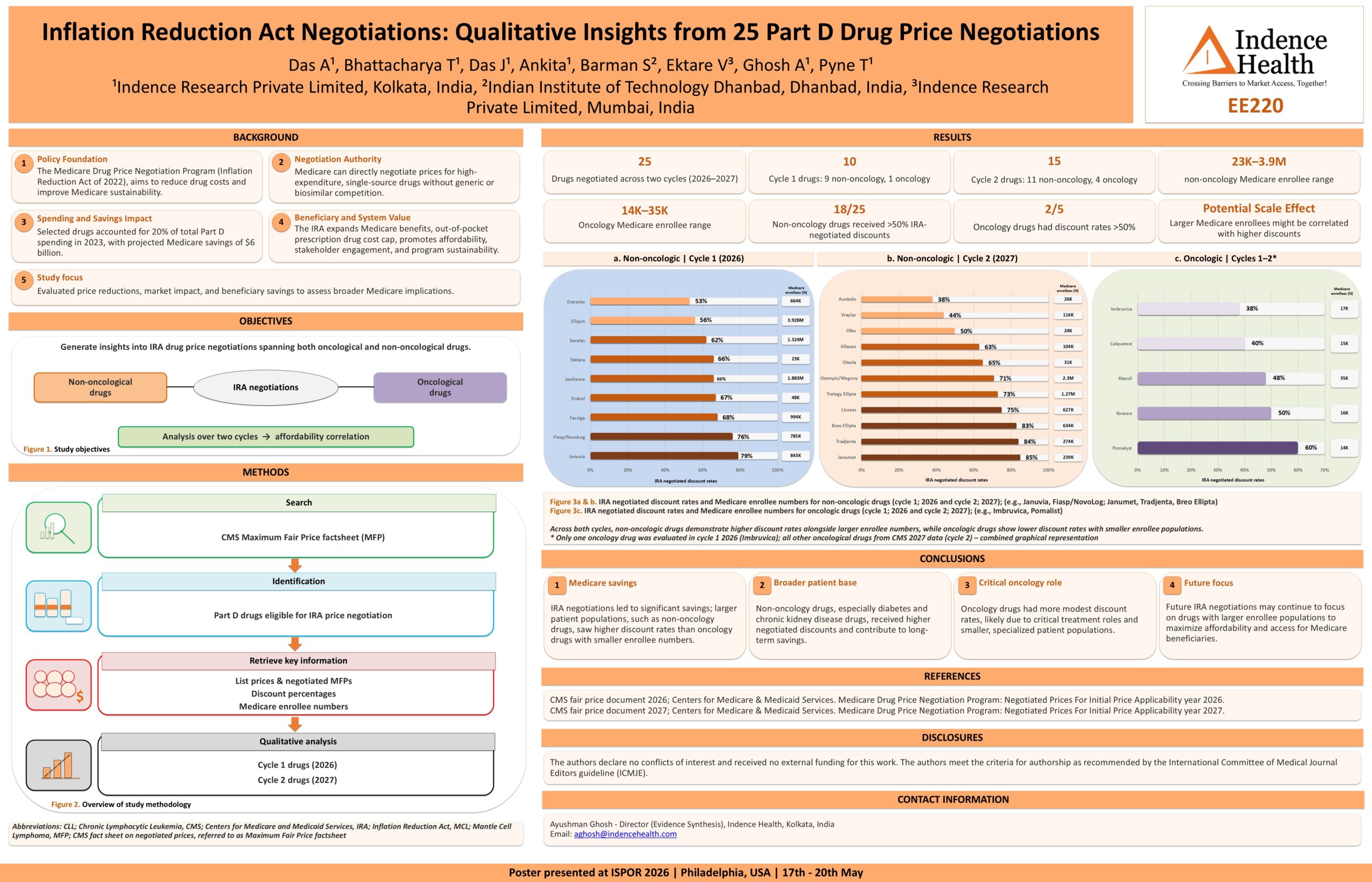


Publicly reported negotiated prices under the Medicare Drug Price Negotiation Program provide drug-level information, but viewing each product in isolation makes it difficult to see broader patterns across negotiation cycles and therapeutic areas. A cross-product assessment can add a different layer of value by comparing the scale of negotiated reductions, the size of the exposed Medicare population, and how these features differ between oncology and non-oncology medicines.
The analysis examined 25 Medicare Part D drugs across the 2026 and 2027 negotiation cycles. Ten drugs were included in the first cycle and 15 in the second. Twenty were non-oncology medicines and five were oncology medicines. Medicare enrollee counts reported for the non-oncology products ranged from approximately 23,000 to 3.9 million, compared with approximately 14,000 to 35,000 for the oncology products. Negotiated reductions in the five oncology products ranged from 38% to 60%, while the non-oncology examples extended as high as 85%. Across the two cycles, the descriptive pattern showed that larger enrollee populations were more common among products with larger negotiated reductions.
The value of the work is therefore comparative rather than causal. It converts separate public pricing fact-sheets into a cross-cycle view that makes differences in population scale and negotiated reductions easier to see. These patterns can generate useful questions about affordability, budget exposure, and negotiation strategy, but they should not be interpreted as proving why a particular discount was achieved. The observed relationship between enrollee volume and discount magnitude is descriptive and may reflect multiple underlying factors.