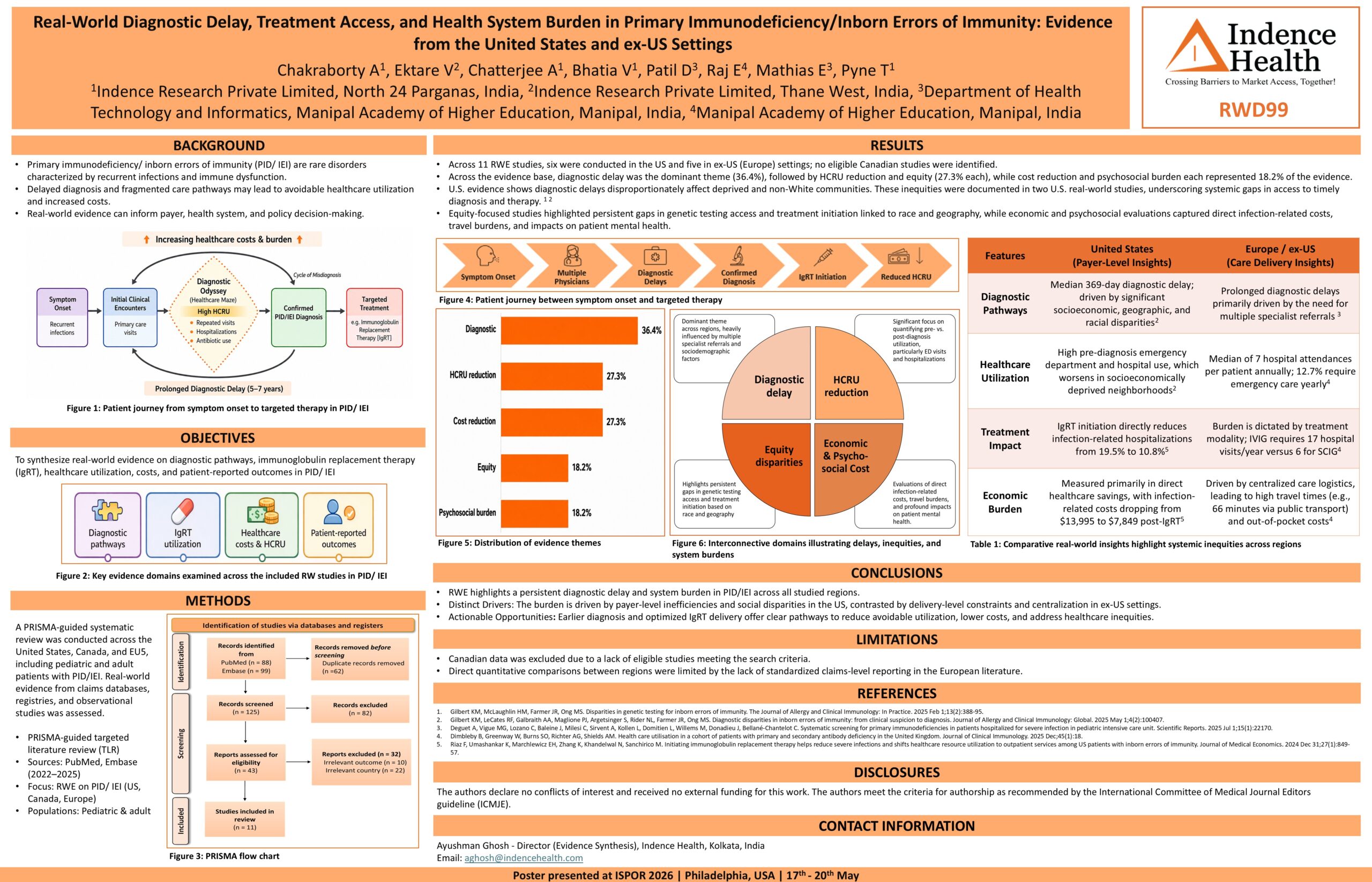


For primary immunodeficiency and inborn errors of immunity, recurrent infections are only one part of the burden. Delayed recognition, repeated healthcare use before diagnosis, access to genetic testing and immunoglobulin replacement, travel requirements, and psychosocial consequences can accumulate across the patient journey. These effects are often reported in separate real-world publications, making it difficult to see how diagnostic delay, inequity, treatment logistics, and economic burden interact at a health-system level.
The review synthesized 11 real-world publications. Six were from the United States and five were from European settings. Diagnostic delay was the most frequently represented evidence theme, followed by healthcare-resource-use reduction and equity. Publications from the United States described a median diagnostic delay of 369 days in one analysis and documented socioeconomic, geographic, and racial disparities in progression from clinical suspicion to diagnosis and treatment. Other evidence showed that initiation of immunoglobulin replacement therapy was associated with fewer infection-related hospitalizations, while European publications highlighted repeated hospital attendance and substantial differences in visit burden between intravenous and subcutaneous immunoglobulin delivery.
The secondary value of the synthesis is the connection of evidence domains that are usually viewed separately. By placing diagnostic pathways, equity, treatment access, healthcare utilization, costs, and patient burden within a common patient-journey framework, the review shows how delays can translate into downstream system consequences rather than remaining a diagnostic issue alone. It also identified a geographic evidence gap. Despite an explicit search, no publication from Canada met the review criteria.