

Long COVID-19 is not a single, uniform clinical state. Risk factors and symptom patterns can differ according to how long symptoms have persisted after the initial infection, making a single undifferentiated summary difficult to interpret. In India, where the published evidence was spread across relatively small and methodologically varied publications, a stage-specific synthesis was needed to understand how the profile changes over time.
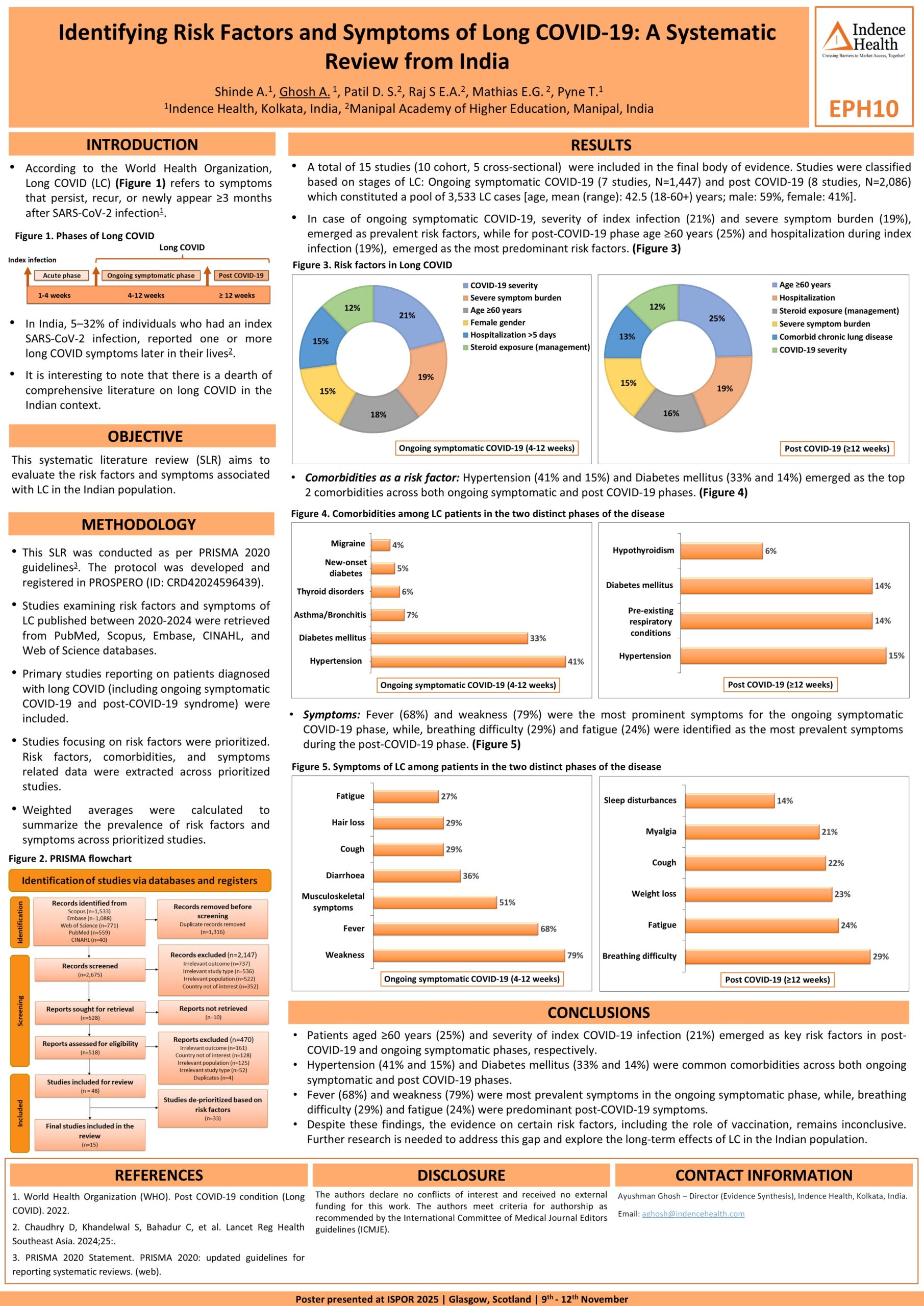
Fifteen publications, comprising 3,533 subjects with Long COVID-19 disease, were included. Seven publications represented the ongoing symptomatic phase and eight the post-COVID-19 disease phase. In the ongoing symptomatic phase, severity of the initial infection and severe symptom burden were among the most prominent reported risk factors, while age 60 years or older and hospitalization during the initial infection were most prominent in the later post-COVID-19 disease phase. Hypertension and diabetes mellitus were recurring comorbidities across both phases. Symptom patterns also shifted. Fever and weakness were prominent during the ongoing symptomatic phase, whereas breathing difficulty and fatigue were among the leading symptoms reported later.
The contribution of this review is therefore not simply a list of symptoms already described by individual cohorts. By separating evidence according to disease phase and synthesizing risk factors, comorbidities, and symptoms within that temporal structure, it shows how the long-term clinical profile may evolve rather than remain static. It also exposes important evidence gaps, including uncertainty around factors such as vaccination, and provides a clearer basis for designing future Indian research that distinguishes persistence, transition, and late symptom burden.