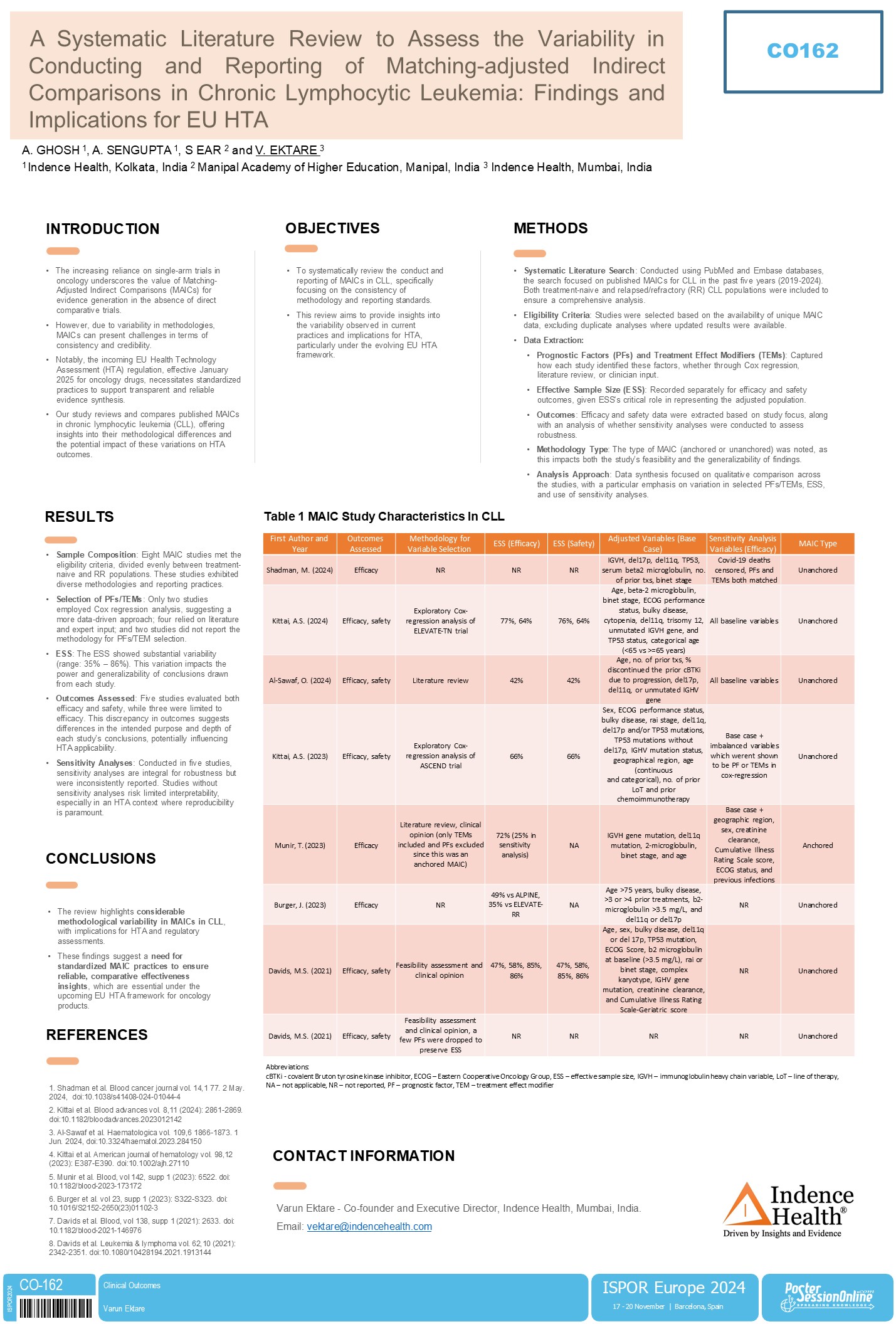


A Systematic Literature Review to Assess Variability in Conducting and Reporting of Matching-Adjusted Indirect Comparisons in Chronic Lymphocytic Leukemia: Findings and Implications for European Union Health Technology Assessment
When direct head-to-head evidence is unavailable, matching-adjusted indirect comparisons can help address comparative evidence gaps. Their usefulness, however, depends heavily on analytical choices – which prognostic factors and treatment-effect modifiers are selected, how much of the original sample remains represented after adjustment, which outcomes are evaluated, and whether sensitivity analyses test the robustness of the result. In chronic lymphocytic leukemia, published matching-adjusted indirect comparisons therefore provide an opportunity to examine not only treatment effects, but also the consistency of the methods used to generate them and the transparency with which those methods are reported.
This systematic literature review identified eight matching-adjusted indirect comparison publications published between 2019 and 2024, split evenly between treatment-naive and relapsed or refractory populations. Methodological practice varied materially. Two publications used Cox regression to inform selection of prognostic factors or treatment-effect modifiers, four relied on literature and expert input, and two did not report the selection method. Effective sample size after adjustment ranged from 35% to 86% of the original sample. Five publications assessed both efficacy and safety, while three evaluated efficacy alone, and sensitivity analyses were reported in five of the eight publications. Together, these findings demonstrate variability both in how MAICs were conducted and in the extent to which key methodological decisions and robustness assessments were reported.
The value of this synthesis lies beyond cataloging a set of comparative treatment estimates. By examining the published analyses collectively, the review showed where methodological and reporting decisions differ across otherwise similar evidence-generation exercises and where those differences may affect transparency, robustness, and interpretability. For EU HTA, these findings highlight the importance of transparent and consistent reporting of covariate-selection rationale, effective sample size and associated loss of precision, outcome selection, and sensitivity analyses when MAICs are used to address comparative evidence gaps. Greater consistency in the conduct and reporting of these analyses may facilitate assessment of the validity, robustness, and interpretability of MAIC evidence when randomized head-to-head trials are unavailable.